Reported by: Dr. C. Lalthantluangi
Organized by: Department of Psychology, IQAC & ICT Cell, Govt. Hrangbana College (GHBC)
Dates: 22nd to 28th July 2025
Mode: Hybrid (Zoom & In-person at Room No. 604, Psychology Core Room)YouTube+2YouTube+2GHBC+2
Overview
The Department of Psychology at Govt. Hrangbana College, in collaboration with the Internal Quality Assurance Cell (IQAC) and ICT Cell, successfully organized a 7-day international workshop focusing on Neuropsychology and Psychosocial Well-Being. The event brought together esteemed professionals from diverse backgrounds to share insights on the intricate relationship between brain function and psychosocial health.
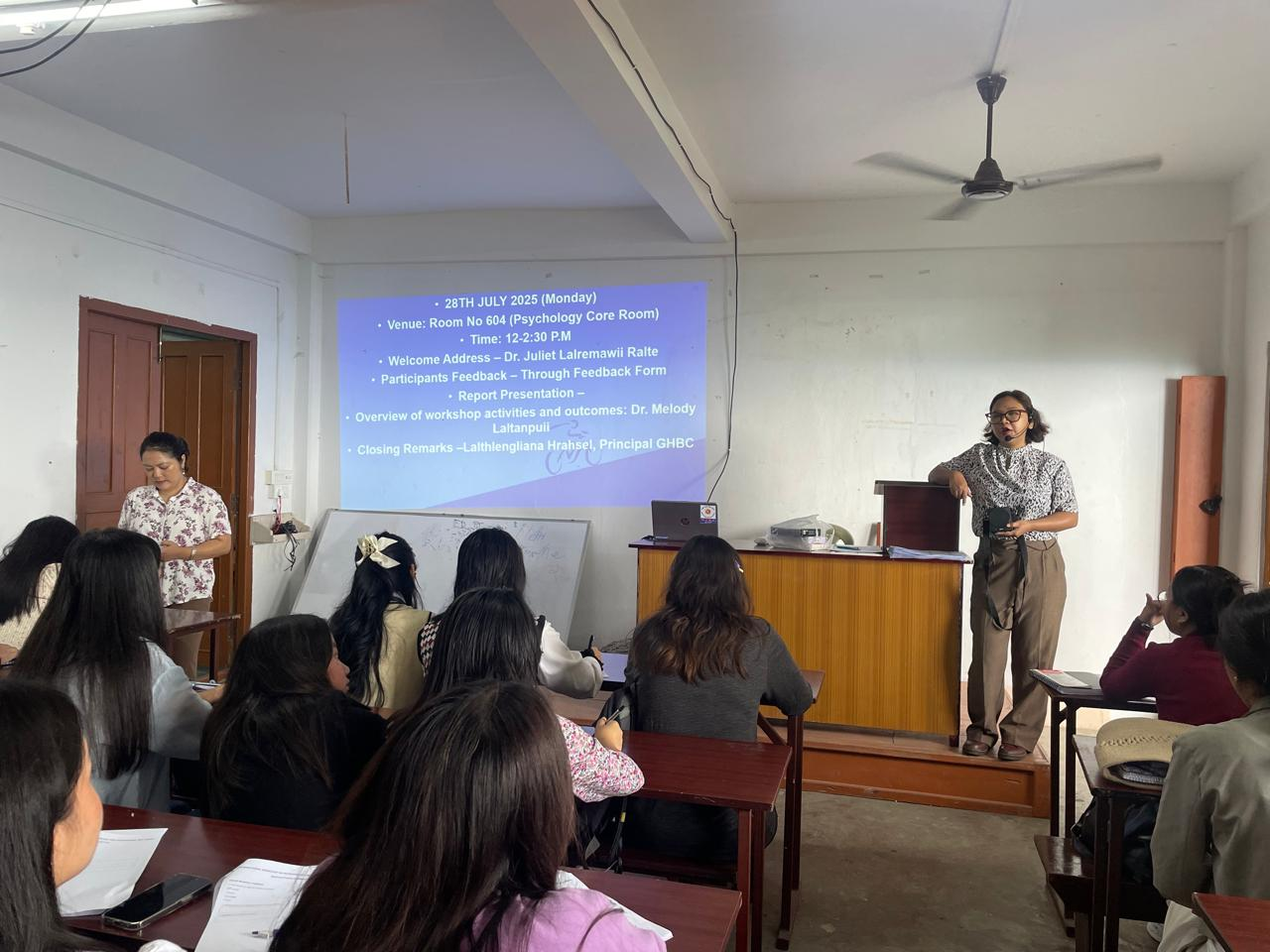
On 28 July 2025, the workshop’s final session was conducted in Room 607 from 10:30 AM to 2:30 PM, opening with a Welcome Address by Dr. Juliet Lalremmawii Ralte, who framed the week’s collective learning and acknowledged the contributions of both participants and organizers. Participants then completed feedback forms to reflect on session effectiveness and overall experience. Dr. Melody Laltanpuii followed with a report presentation that succinctly recapped key topics, participant insights, and outcomes, ensuring alignment with the workshop’s original goals. Finally, the Principal, Mr. Lalthlengliana Hrahsel delivered the closing remarks, expressing gratitude and inspiring attendees to apply their new knowledge in their professional and community contexts. This structured sequence—combining reflection, summary, and formal closure—mirrors recommended workshop ending strategies to reinforce learning, gather evaluation, and leave a lasting positive impression
Workshop Schedule & Highlights
Day 1: 22nd July 2025 (Tuesday)
Chairperson: Dr. Juliet Lalremmawii Ralte
Resource Person: Prof. H.K. Laldinpuii Fente,
Dean, School of Social Sciences, MZU
Topic: The Impact of Addiction on Neural Pathways
Time: 7:00 PM – 9:00 PM
Venue: Zoom Meeting
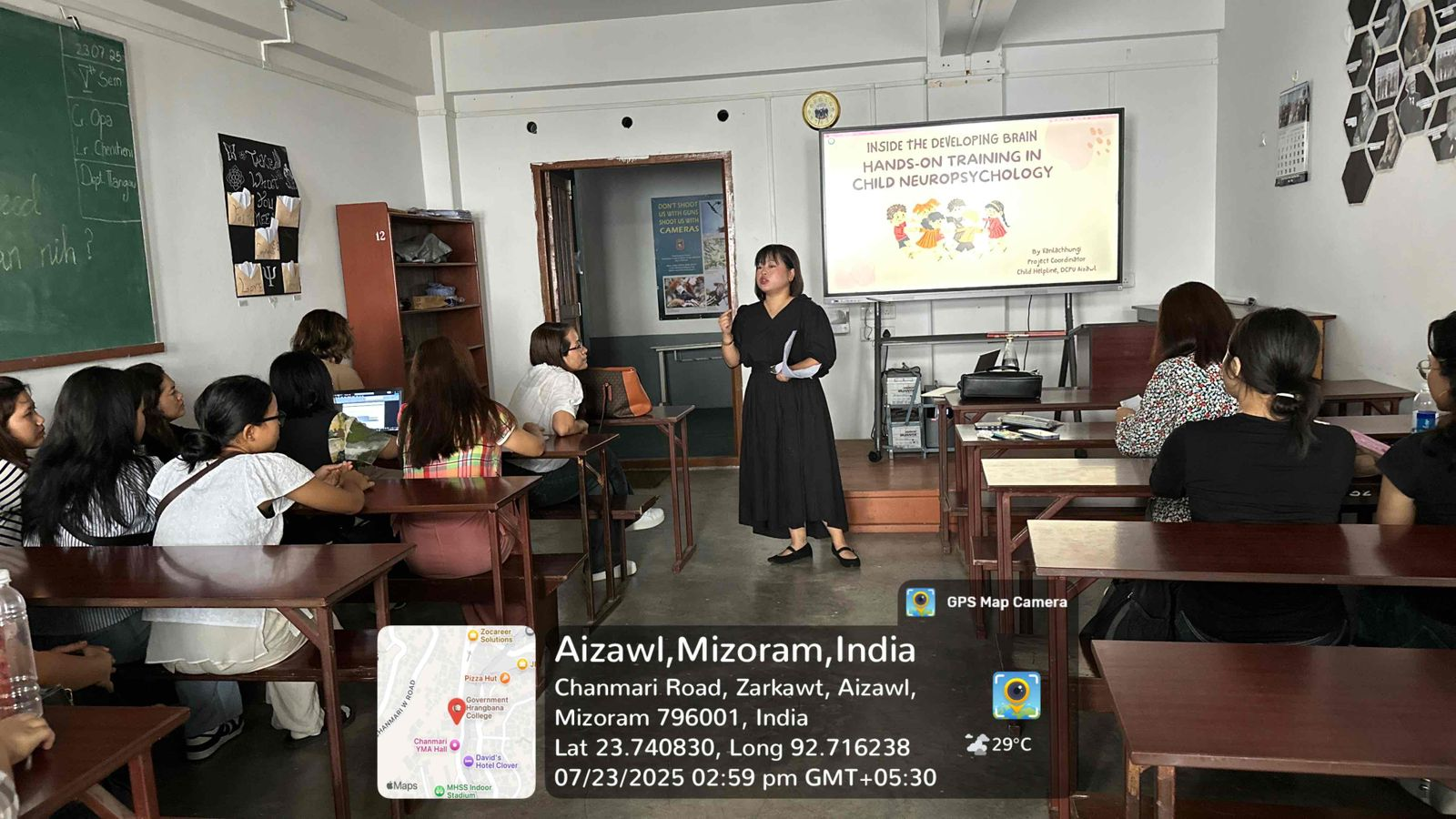
Day 2: 23rd July 2025 (Wednesday)
Chairperson: Prof. Zothanzami
Resource Person: Ms. Vanlalchhungi,
Project Coordinator, Child Helpline Unit, District Child Protection, Aizawl
Topic: Inside the Developing Brain: Hands-on Training in Child Neuropsychology
Time: 2:30 PM – 4:30 PM
Venue: Room No. 604 (Psychology Core Room)
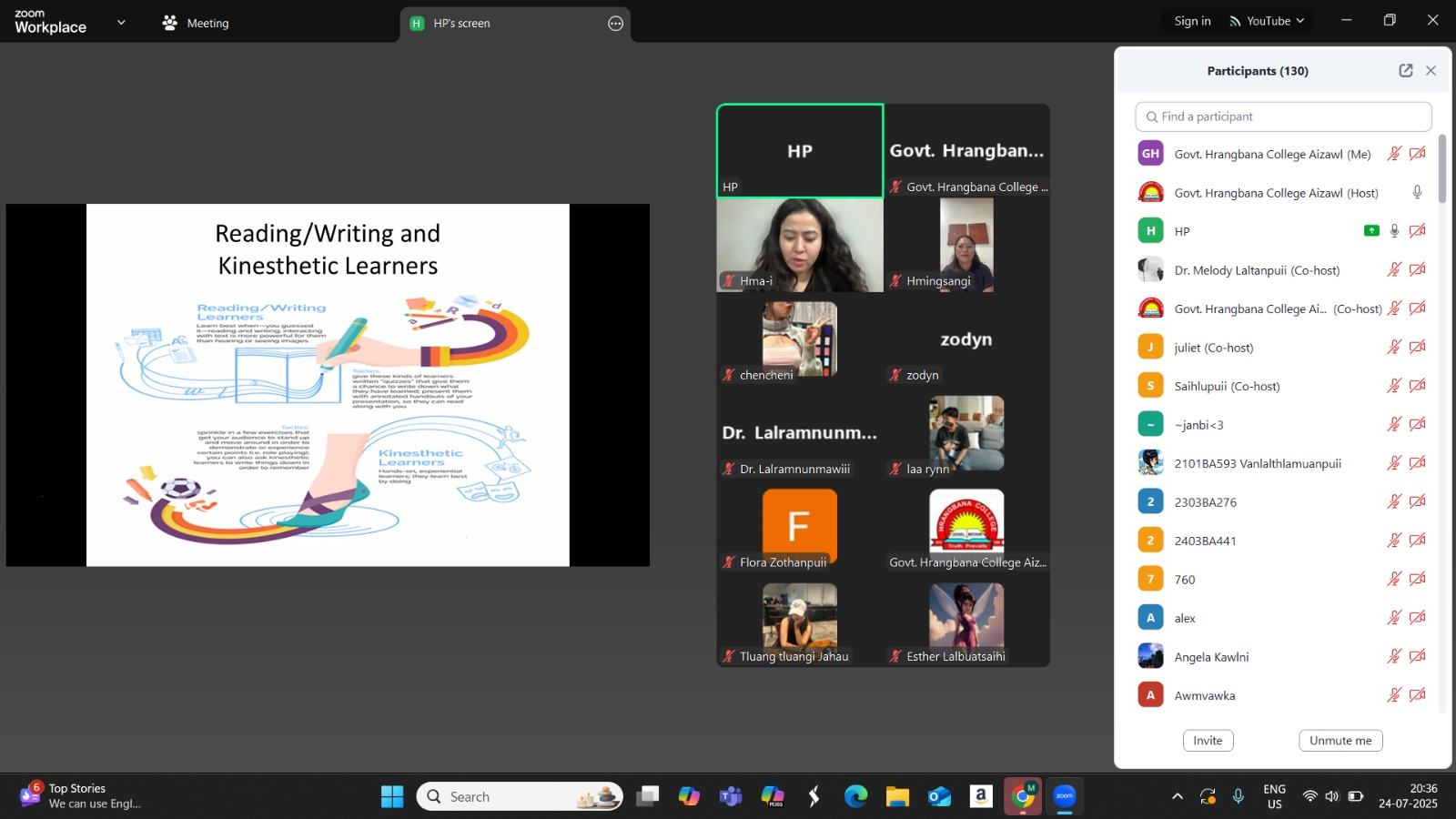
Day 3: 24th July 2025 (Thursday)
Chairperson: Dr. P.C. Lalhmingsangi
Resource Person: Prof. Lalfamkima Varte,
Dean, School of Medical and Paramedical Science.
Topic: Modularity and Plasticity of the Brain and Learning
Time: 7:00 PM – 9:00 PM
Venue: Zoom Meeting
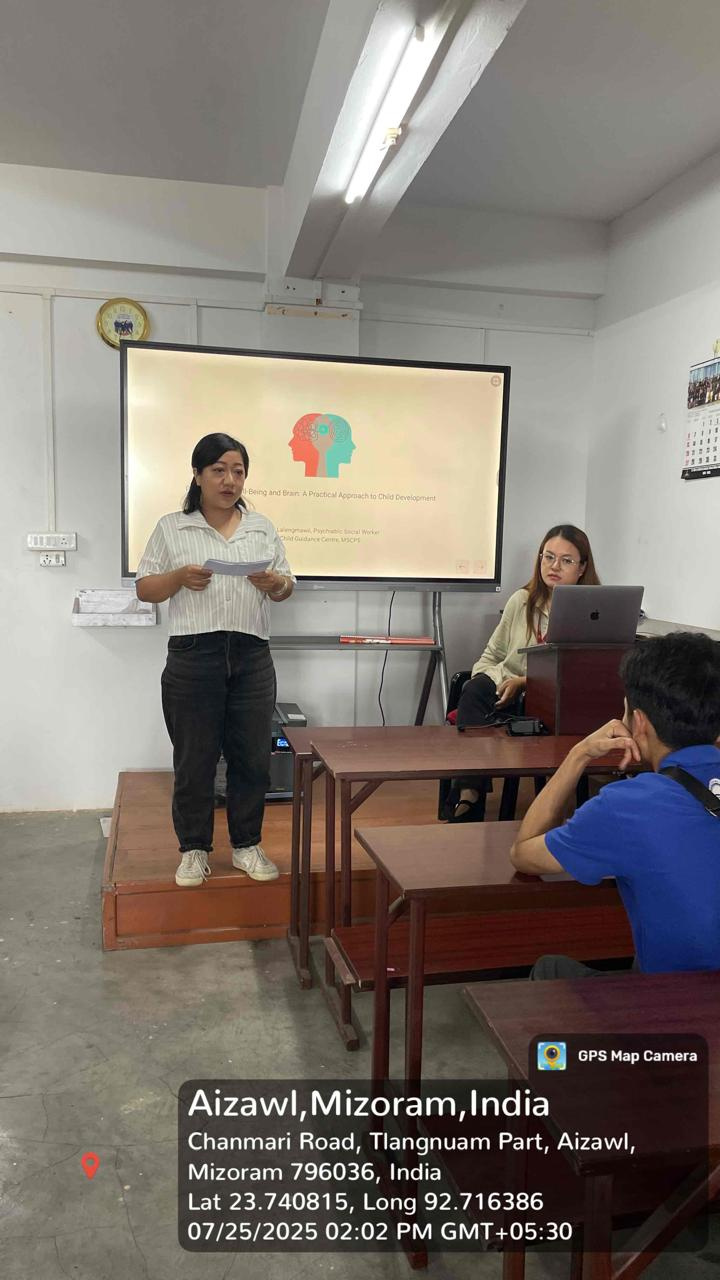
Day 4: 25th July 2025 (Friday)
Chairperson: Ms. Lalparmawii Khiangte
Resource Person: Ms. Maria Lalengmawii,
Psychiatric Social Worker, Child Guidance Center
Topic: Psychosocial Well-Being and Brain: A Practical Approach to Child Development
Time: 2:00 PM – 4:00 PM
Venue: Room No. 604 (Psychology Core Room)
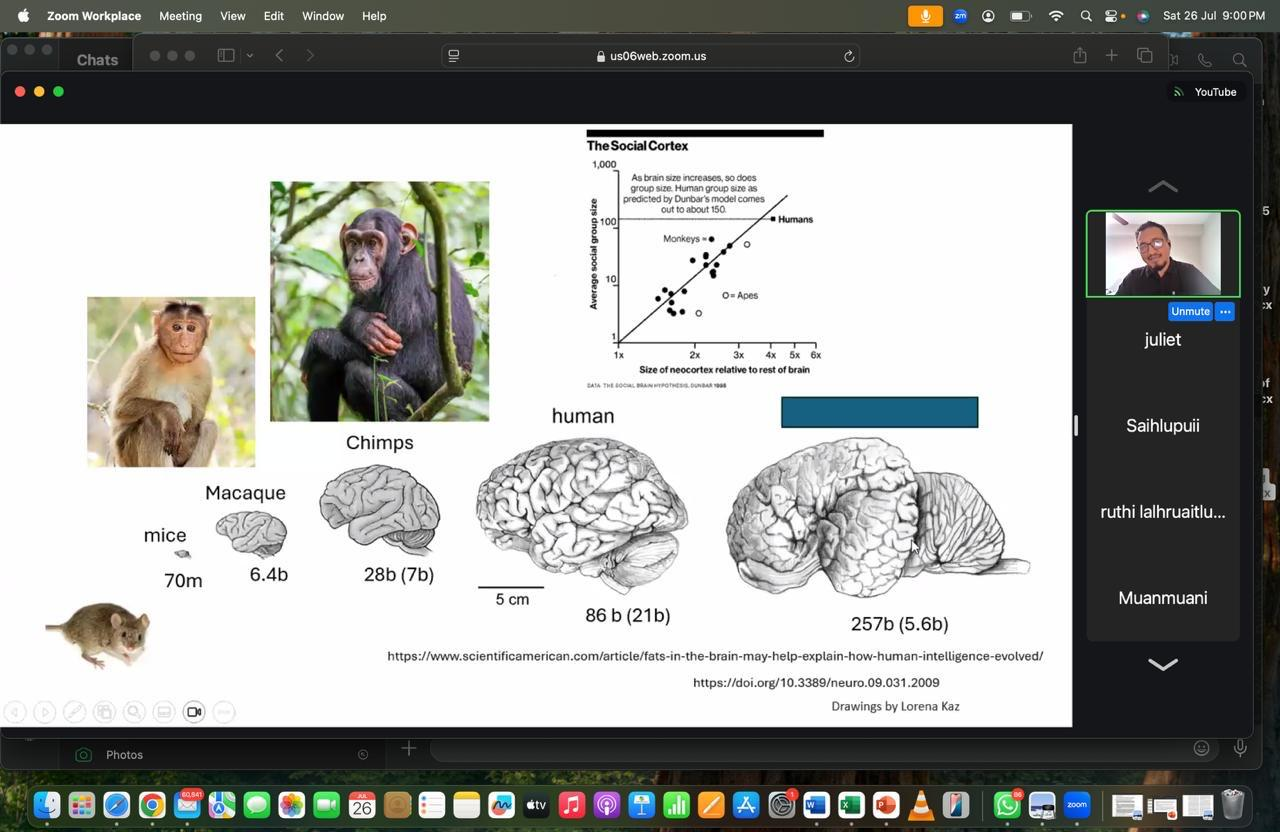
Day 5: 26th July 2025 (Saturday)
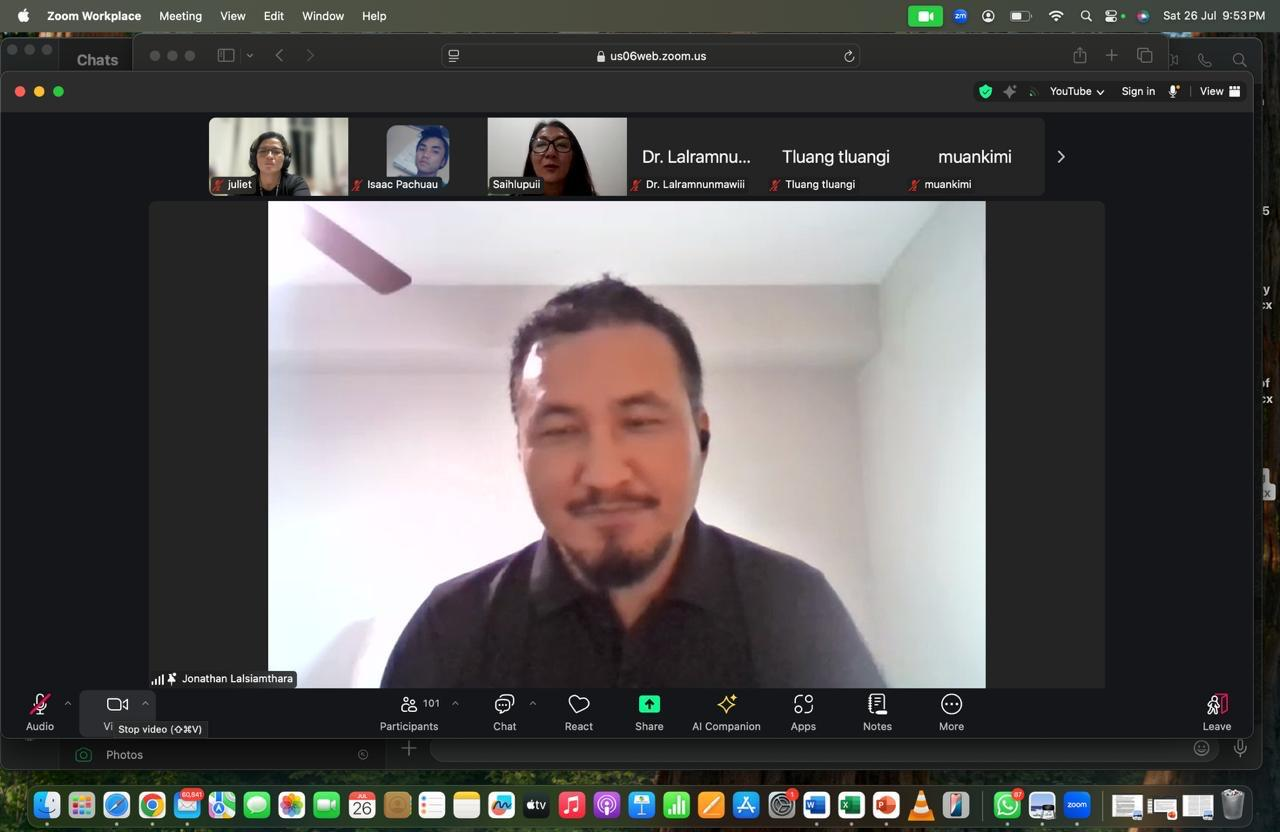
Chairperson: Ms. Saihlupuii
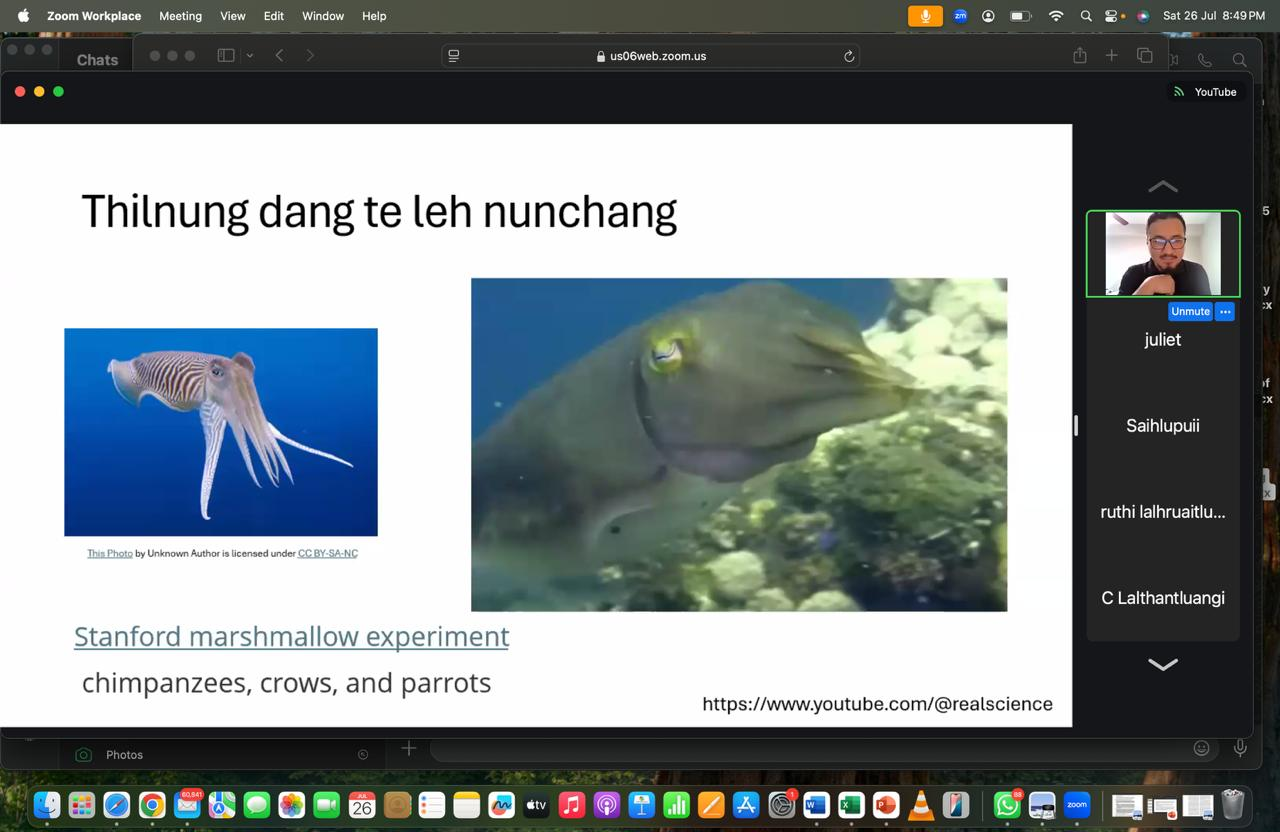
Resource Person: Dr. Jonathan Lalsiamthara,
Research Scientist, Department of Genetics, UT MD Anderson Cancer Center (UT MDACC), Houston, TX, USA
Topic: From Biomolecules to Complex Behaviour and Mind
Time: 8:00 PM – 10:00 PM
Venue: Zoom Meeting
Day 5: 27th July 2025 (Sunday)
Workshop Assignment: Applying Neuropsychology & Psychosocial Well‑Being Principles
Objective: Integrate and apply the knowledge and skills gained during the 7-day workshop to develop a contextually relevant intervention, case analysis, or implementation plan.
Day 6: 28th July 2025 (Monday)
Venue: Room No. 604 (Psychology Core Room)
Time: 12:00 PM – 2:30 PM
- Welcome Address: Dr. Juliet Lalremmawii Ralte
- Participants' Feedback: Collected via Feedback Forms
- Report Presentation: Dr. Melody Laltanpuii
- Closing Remarks: Mr. Lalthlengliana Hrahsel, Principal, GHBC
Organizing Committee
- Coordinators: Dr. Juliet Lalremmawii Ralte & Dr. Melody Laltanpuii
- Recording Secretaries: Ms. Lalparmawii Khiangte & Dr. C. Lalthantluangi
- Media In-Charge: Prof. Zothanzami
- Attendance In-Charge: Ms. Saihlupuii & Dr. P.C. Lalhmingsangi
- ICT Related In-Charge: ICT Cell
OVERVIEW OF RESOURCE PERSONS AND THEIR SESSIONS
Prof. H. K. Laldinpuii Fente
Dean, School of Social Sciences, MZU
Expertise: Professor of Psychology at Mizoram University, trained at Princeton University as a Fulbright scholar. Her specialties include cross‑cultural psychology, clinical and neuropsychology,
research methodology, and mental health.
Workshop Topic: “The Impact of Addiction on Neural Pathways”
Remarks:
As a leader in cross-cultural and clinical psychology research, Prof. Laldinpuii Fente’s insights would have illuminated how addiction reconfigures brain function while being shaped by socio-cultural contexts. Her ability to connect local community patterns with broader psychological theory likely resonated deeply with participants, especially in an Indian/Northeast context.
Ms. Vanlalchhungi
(Child Helpline Unit, District Child Protection)
Expertise: Project Coordinator at District Child Protection, working with child helpline services.
Workshop Topic: “Inside the Developing Brain: Hands-On Training in Child Neuropsychology”
Remarks:
Ms. Vanlalchhungi’s role suggests direct involvement with vulnerable children and protective services. Her presentation probably combined theoretical neuropsychology principles with field-based applications—offering participants pragmatic strategies to support children’s neural and emotional development through protective and psychosocial frameworks.
Prof. Lalfamkima Varte
(Dean, School of Medical and Paramedical Science)
Expertise: Faculty member in the Department of Psychology at Mizoram University
Workshop Topic: “Modularity and Plasticity of the Brain and Learning”
Remarks:
While publicly available profiles are limited, delivering a lecture on brain modularity and plasticity suggests Prof. Varte applies contemporary cognitive neuroscience principles to learning and education. Her session probably emphasized how the brain adapts through learning experiences—highly relevant for educators and psychologists focusing on developmental trajectories.
Ms. Maria Lalengmawii
(Child Guidance Center)
Expertise: Psychiatric Social Worker specializing in child development and psychosocial well-being.
Workshop Topic: “Psychosocial Well‑Being and Brain: A Practical Approach to Child Development”
Remarks:
With her frontline experience working with children, Ms. Lalengmawii likely grounded the discussion in real-world practices—exploring how psychosocial environments, emotional support, and social interventions can foster healthy brain development. Her approach practically links psychological well-being with neural growth.
Dr. Jonathan Lalsiamthara
(UT MD Anderson Cancer Center)
Expertise: Senior Research Scientist specializing in molecular biology, immunology, microbiology—including C. elegans immunobiology and vaccine-related research.
Workshop Topic: “From Biomolecules to Complex Behaviour and Mind”
Remarks:
Dr. Lalsiamthara’s deep research background in biomolecular mechanisms makes him uniquely positioned to bridge biological foundations with complex behavior. His presentation likely offered a rigorous scientific grounding on how molecular processes—like those studied in vaccine and immunity research—can underpin behavioral outcomes and neuropsychological health.
Collective Perspective
- Integration of Biology and Applied Psychology: Dr. Jonathan Lalsiamthara delivered a biologically rigorous angle, while others focused on social, developmental, and clinical dimensions—offering a comprehensive and integrative learning experience.
- Local Relevance with Global Insight: Prof. Laldinpuii Fente and Prof. Llafamkima Varte grounded neuroscience theory within Mizoram’s cultural and educational context; Ms. Lalengmawii and Ms. Vanlalchhungi brought community-level practice to the forefront.
- Child-Centric Emphasis: Three sessions directly addressed child development—ensuring the workshop emphasized foundational years and early interventions.
Key Takeaways
- The workshop provided an interdisciplinary platform to explore the nexus between neuropsychology and psychosocial well-being.
- Participants gained hands-on experience and theoretical knowledge on topics ranging from neural pathways affected by addiction to the role of biomolecules in behavior.
- The hybrid format facilitated broader participation, ensuring inclusivity and wider dissemination of knowledge.
Workshop Outcomes:
- Participant Feedback & Immediate Reactions
- High engagement and satisfaction: Participants rated the sessions especially those on child neuropsychology and brain plasticity, as highly relevant and contextually meaningful.
- Interactive format appreciated: Hands‑on components (e.g. inside‑the‑brain training, practical approaches) and hybrid delivery (Zoom + in-person) were frequently praised for accessibility and learning impact.
2. Knowledge Acquisition & Skill Gain
- Attendees reported clear gains in understanding:
- Prof. Laldinpuii Fente’s session clarified how addiction alters neural pathways.
- Prof. Lalfamkima Varte’s talk deepened understanding of modular brain design and adaptive learning.
- The child‑focused sessions enhanced participants’ awareness of psychosocial and developmental interventions.
3.Skill-building outcomes:
Practical demonstrations (e.g. child neuropsychology methods, psychosocial techniques) were noted to increase participants’ confidence in applying knowledge.
Behavioral & Practice Changes
Participants — especially educators, counselors, and social workers — expressed commitment to:
- Implement trauma-informed practices and child‑centred neuropsychological methods.
- Apply modular learning strategies and psychosocial support frameworks in local settings.
- Foster collaborative environments bridging molecular, psychological, and social perspectives.
4. Broader Impacts:
Institutional ripple effect: The workshop built a foundation for follow-up community outreach and integration of psychosocial policies in local child services.
Networking and collaboration potential: Connections with MZU faculty, child guidance professionals, and international researchers like Dr. Jonathan Lalsiamthara are expected to catalyze future action research and inter-institutional initiatives.
Recommendations and Next Steps
Based on participant feedback, observed learning, and current evaluation frameworks
- Introduce participant case presentations: Allow attendees to bring real-world examples to deepen learning and encourage peer collaboration.
- Facilitate interdisciplinary dialogue: Plan a roundtable or panel in future editions to integrate biomolecular insights with applied psychosocial practice.
- Establish follow-up mechanisms: Conduct short-term follow-ups (e.g. 3‑month surveys or virtual check‑ins) to assess translation of workshop learning into behavior and practice.
- Plan for community outreach: Build on local expertise (e.g. Child Helpline Unit, Child Guidance Center) to pilot small-scale psychosocial interventions informed by workshop content.
Each speaker contributed a vital and distinct perspective—from molecular underpinnings to societal practices—creating a rich, multidisciplinary exploration of neuropsychology and wellness. Let me know if you'd like suggestions on how to summarize participants’ feedback or highlight outcomes next!
for more detail, please login to HBC Youtube Channel : https://www.youtube.com/@GovtHrangbanaCollegeAizawl/streams