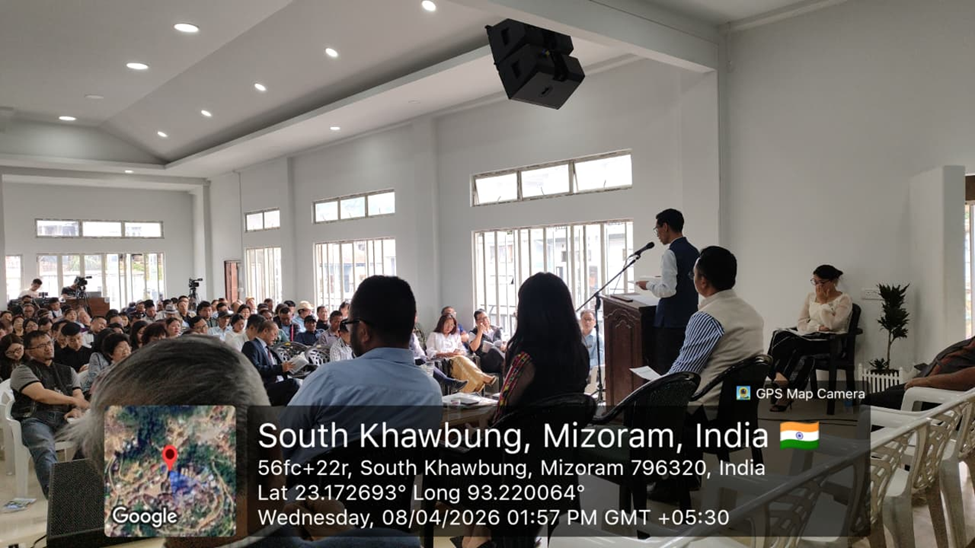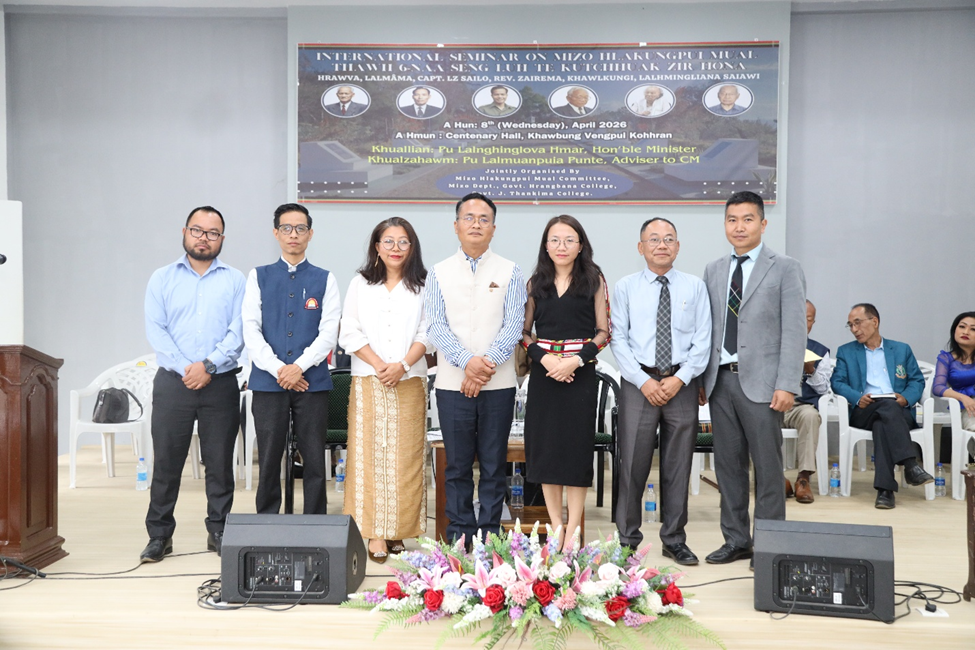
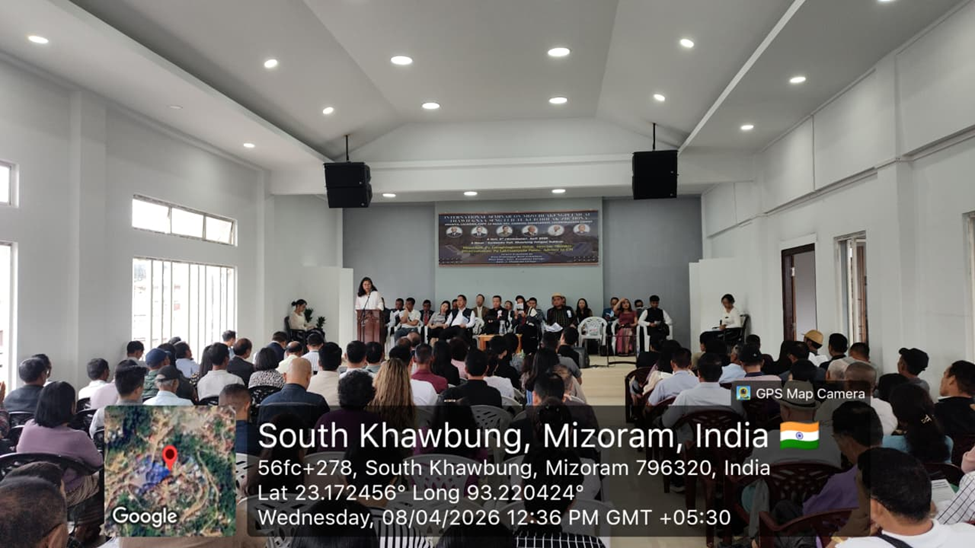
The academic community recently celebrated a significant milestone in the preservation of Mizo heritage with a two-day International Seminar titled “Mizo Hlakungpui Mual Sengluh Thawh Rukna (Seng luhte thu leh hla zir zauna).” Held from April 8–9, 2026, at the Centenary Hall in Khawbung, the event was a high-profile collaborative effort involving the Mizo Hlakungpui Mual Committee, the Mizo Department of Government Hrangbana College, and Government J. Thankima College, Aizawl. The seminar served as a scholarly platform to analyze the profound literary contributions of the icons enshrined at the Mizo Poets’ Square (Hlakungpui Mual).
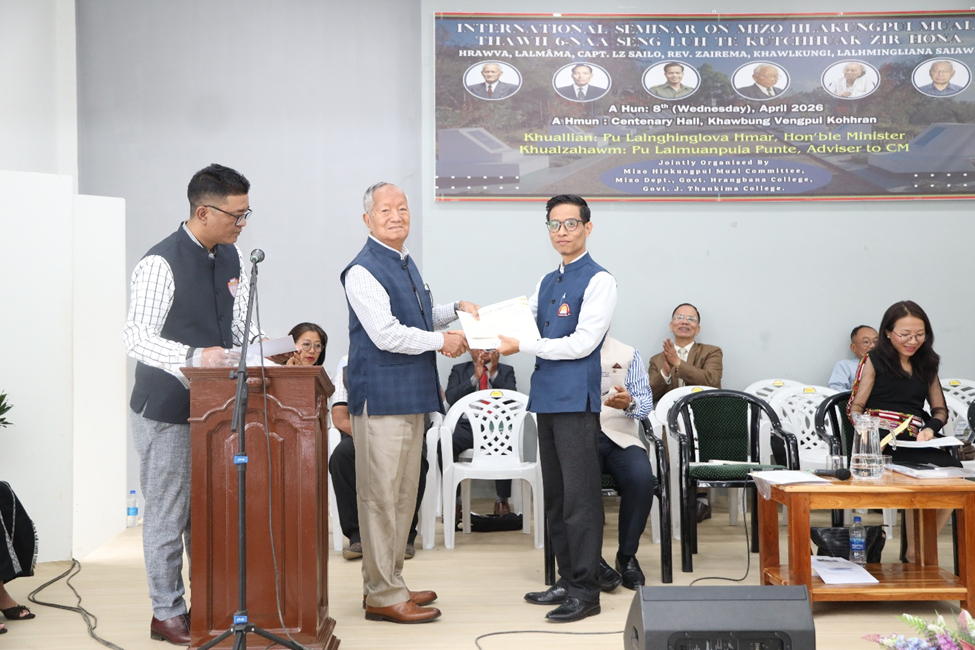
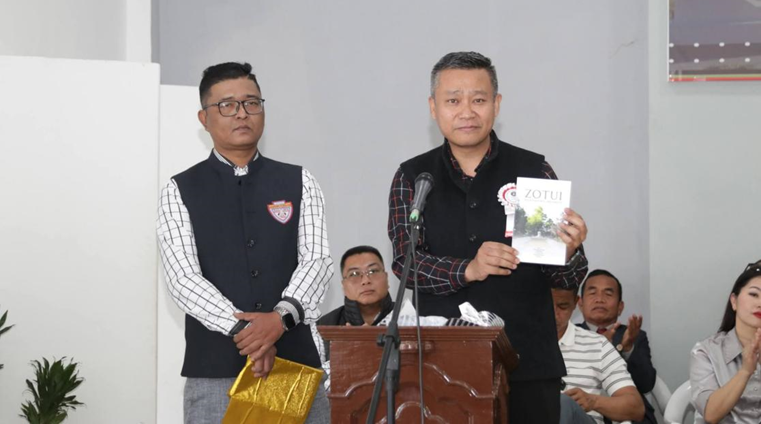
The seminar was structured into intensive sessions featuring expert analyses from distinguished scholars across the region. The inaugural function was chaired by Mr. H. Lalnunmawia, Vice Chairman of the Mizo Hlakungpui Mual. Pu Lalnghinglova Hmar, Minister of State, Government of Mizoram, graced the seminar as Chief Guest and also released a seminar proceedings book.
The first technical session, moderated by Pu R. Lallianzuala, Chairman of the Mizo Language Board, included presentations on the works of Lalmama by journalist Zalianthanga from Tahan, Myanmar; ‘Captain L.Z. Sailo Kutchhuakte” by Lalzuitluanga (Churachandpur College, Manipur); and an in-depth exploration of Khawlkungi’s writings by Dr. Sangrozami (Government J. Thankima College).
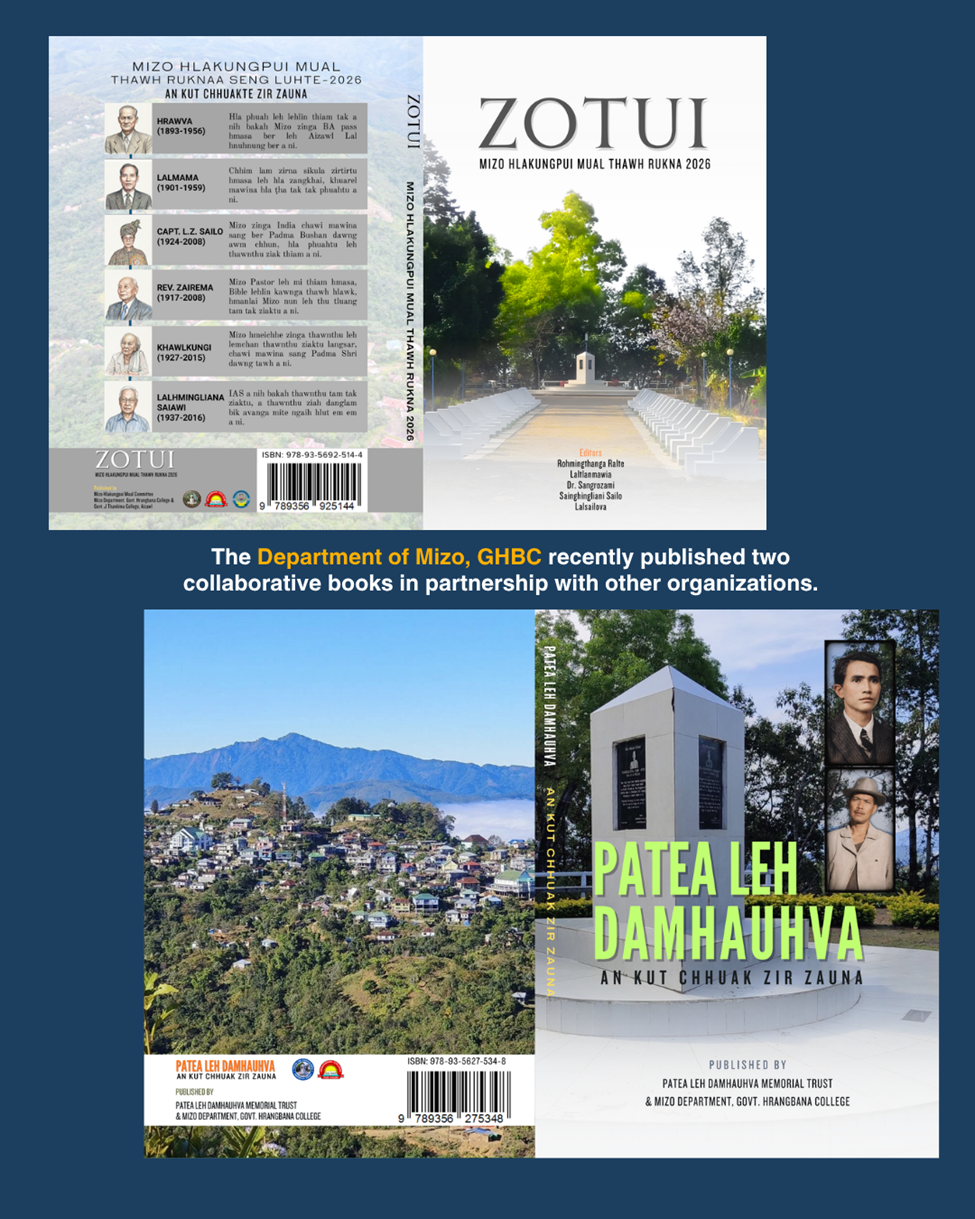
The second session featured a keynote address by Pu Lalmuanpuia Punte, MLA and Adviser to the Chief Minister, who reaffirmed the government’s dedication to safeguarding Mizo linguistic identity and culture. This afternoon block, moderated by Dr. Zoramdinthara (Head of the Department of Mizo, Mizoram University), included critical papers on “Hrawva leh A Hlate Zir Zauna” by V. Lalberkhawpuimawia (GHBC), “Lalhmingliana Saiawi Thu leh Hla” by Lalremruati Ngente (Mizoram Christian College), and “Rev. Zairema Kutchhuak Zir Zauna” by H. Lalawmpuia, presented by faculty from Government Aizawl West College. A question‑and‑answer session and an interactive period were held after the session. The choice of Khawbung as the venue added immense symbolic weight to the proceedings, as it coincided with the sixth induction ceremony at the monument. By formally inaugurating the lives and works of six distinguished writers into the Hlakungpui Mual, the seminar not only provided academic rigor but also played a vital role in documenting and cementing the legacy of Mizo literary giants for the future. The Department of Mizo recently published two collaborative books released on the seminar and it was published and edited in partnership with other organizations.
On the second day, April 9, an inaugural monument dedicated to six prominent literary figures was unveiled at the Hlakungpui Mual site. Thousands of people, including villagers, family members of the inductees, scholars, and students, attended the ceremony.